What WikiLeaks Was and How It Operated
WikiLeaks launched in 2006 as a platform for publishing leaked documents and classified information. It was built on the principle that transparency serves the public interest, accepting submissions from whistleblowers, journalists and sources who wanted to disclose information without attribution. The organization used a submission system designed to protect source anonymity through encryption and technical safeguards.
The platform became known for publishing large document caches, including diplomatic cables, military records and corporate communications. WikiLeaks did not operate as a traditional news outlet; instead, it published raw documents alongside analysis, allowing readers to draw their own conclusions. The organization maintained that publishing unredacted information served accountability, though this approach generated significant controversy and legal challenges from governments and organizations whose communications were exposed.
WikiLeaks and Tor: The Dark Web Connection
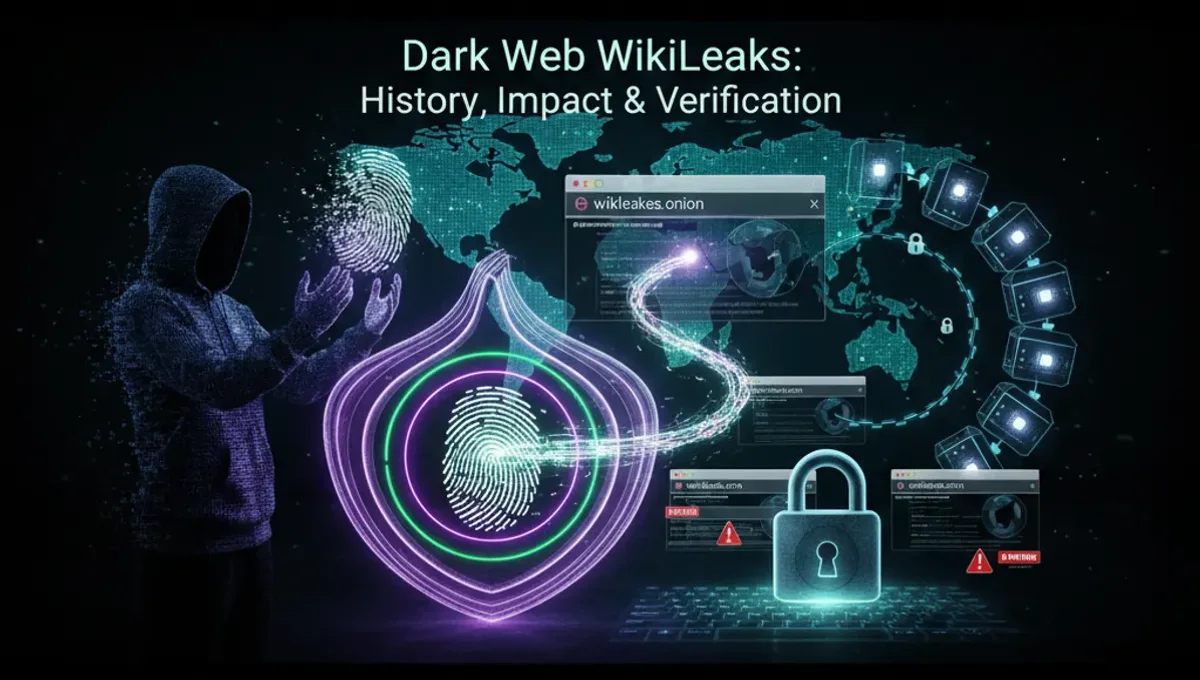
WikiLeaks established a presence on the Tor network through onion mirrors, but this was not its primary platform. The organization created these mirrors to ensure that people in countries with internet censorship could access published documents without detection. An onion mirror is a copy of a website hosted as an onion service, accessible only through the Tor Browser.
The dark web infrastructure allowed WikiLeaks to operate in jurisdictions where governments had blocked the main website. However, WikiLeaks' core operations were not hidden; the organization maintained a public-facing website and engaged openly with media outlets. The onion mirrors served a specific function: providing redundancy and access in restricted environments. This distinction matters because many people conflate WikiLeaks with the dark web itself, when in reality it was a mainstream organization that used dark web tools strategically.
How to Identify Authentic WikiLeaks Onion Mirrors
Phishing clones of WikiLeaks onion addresses pose a real risk to users seeking to verify leaked information or submit documents. Attackers create fake mirrors that mimic the legitimate site's appearance, hoping to capture credentials or trick users into believing false information.
To verify an authentic WikiLeaks onion address:
- Visit the official WikiLeaks website (the clearnet version) and look for official links to onion mirrors
- Check for PGP-signed announcements from WikiLeaks' official channels
- Verify the onion address against multiple independent sources, not just one link
- Use the Tor Browser's security features and keep it updated
- Never enter sensitive information into an onion site unless you have verified its authenticity through multiple channels
The best dark web search engines and directories cannot guarantee the authenticity of any onion address. Always cross-reference addresses through official sources before trusting them.
Why WikiLeaks Mattered to Information Security
WikiLeaks' publications revealed systemic issues in government and corporate operations, from diplomatic embarrassments to military conduct. The organization demonstrated that large-scale document leaks were possible and that the internet could serve as a vehicle for accountability. This had profound implications for how organizations approached information security and classification.
For security professionals, WikiLeaks became a case study in both data protection failures and the risks of inadequate access controls. The leaks showed that insider threats were real and that even highly classified information could be copied and transmitted by individuals with legitimate access. Organizations responded by implementing stricter data handling policies, better monitoring of data access and more sophisticated classification systems. The WikiLeaks phenomenon also accelerated interest in the best dark web apps and browsers that could provide anonymity to potential whistleblowers, creating a dual effect: both enabling disclosure and forcing institutions to reckon with transparency.
Legal Status and Ongoing Challenges
WikiLeaks faced legal pressure from multiple governments and organizations. The United States pursued criminal investigations into the organization and its founder, though the legal basis for prosecuting a publisher of leaked information remained contested. Different countries applied different standards, with some treating WikiLeaks as a legitimate news organization and others as a facilitator of espionage.
The organization's status changed over time. Some of its infrastructure was taken offline, financial services cut off its accounts and hosting providers faced pressure to remove it. Despite these challenges, WikiLeaks maintained some operational capacity, though at a reduced scale compared to its peak activity. The legal ambiguity around publishing classified information continues to shape how media organizations and whistleblower platforms operate. Understanding this context is essential for anyone researching the dark web's role in information disclosure, as it illustrates the tension between anonymity, transparency and state power.
Reality Layer: How Onion Services and Leaks Actually Work
The Tor Project documentation confirms that onion services provide location privacy but not absolute anonymity for operators; metadata and traffic analysis can sometimes reveal patterns. This matters because WikiLeaks' onion mirrors, while harder to block, were not impervious to surveillance or technical analysis.
Public law-enforcement press releases and court records show that document leaks typically originate from insiders with legitimate access, not from hackers breaking into systems. WikiLeaks' submission system was designed to accept such documents, but the organization had limited ability to verify source identity or prevent false submissions. Security-vendor incident reports consistently show that the biggest risk to whistleblowers is not the dark web platform itself but operational security mistakes: using personal devices, accessing from known locations or leaving digital traces before submission.
Academic research on onion services demonstrates that running a stable, high-traffic onion site requires significant technical expertise and resources. WikiLeaks' ability to maintain mirrors across multiple jurisdictions reflected serious infrastructure investment. For readers evaluating the best dark web pages or best dark web sites for sensitive communication, this reality check is crucial: the platform matters less than the user's own security practices.
Lessons for Whistleblowers and Secure Communication
WikiLeaks' experience offers practical lessons for anyone considering disclosure or using the dark web for sensitive communication. The organization's technical infrastructure was sophisticated, but its greatest vulnerability was always human: sources who did not cover their tracks, who used identifiable devices or who left patterns that could be analyzed.
For someone seeking to submit information securely, the best dark web browser is only one part of the equation. Equally important are operational security practices: using a dedicated device, accessing from a location that does not associate you with the information, using Tor Browser correctly and understanding that metadata (timing, volume, patterns) can reveal identity even when content is encrypted.
WikiLeaks demonstrated that the dark web can serve as infrastructure for accountability, but it also showed that no platform is a substitute for careful personal security. The organization's legal battles and technical challenges illustrate that running a high-profile disclosure platform carries real risks. For individuals considering whistleblowing, consulting with legal counsel, journalists or established organizations like the Freedom of the Press Foundation provides better protection than relying on the dark web alone.
Moving Forward: Verification and Trust in a Fragmented Landscape
The WikiLeaks case illustrates a fundamental challenge of the dark web: how to verify authenticity when anonymity is the default. As the best dark web search engines and best dark web sites proliferate, distinguishing legitimate platforms from phishing clones becomes harder. Users must develop verification habits that do not depend on a single source.
For anyone researching leaked information or considering secure communication, the takeaway is straightforward: the dark web is a tool, not a guarantee. WikiLeaks showed that publishing leaked documents was possible through Tor, but it also showed that legal, technical and operational challenges persist regardless of anonymity infrastructure. The platform's decline in recent years reflects not the failure of the dark web but the real costs of operating a high-profile disclosure service.
Start by visiting the official WikiLeaks clearnet website and following its official links to any onion mirrors. Cross-reference any address you find through multiple independent sources. If you are considering submitting sensitive information, research organizations like the Freedom of the Press Foundation or established news outlets that have secure submission systems. Verify their contact information through official channels, not through dark web search results.
Frequently asked questions
Is WikiLeaks still on the dark web
WikiLeaks maintains onion mirrors for access in censored regions, but the organization's primary website is on the clearnet. The status of specific onion addresses changes, so verify any address through official WikiLeaks channels before trusting it. Phishing clones exist, so cross-reference multiple sources.
How do I know if a WikiLeaks onion address is real
Check the official WikiLeaks clearnet website for official links to onion mirrors. Look for PGP-signed announcements from WikiLeaks' official channels. Never rely on a single source; verify the address through multiple independent references. If you cannot confirm authenticity, do not enter sensitive information.
What is the difference between WikiLeaks and the dark web
WikiLeaks is an organization that publishes leaked documents; the dark web is infrastructure that provides anonymity. WikiLeaks used the dark web as one tool among many, but it was not primarily a dark web platform. The organization operated openly and engaged with mainstream media.
Can I submit documents to WikiLeaks securely
WikiLeaks has a submission system designed for source protection, but security depends on your operational security practices. Use a dedicated device, access from a safe location and understand that metadata can reveal patterns. Consider consulting legal counsel or established press freedom organizations before submitting sensitive information.
Why did WikiLeaks use onion services if it was public
Onion mirrors allowed people in countries with internet censorship to access published documents without detection. The mirrors provided redundancy and ensured that blocking one website did not prevent access. This reflects the dark web's practical function as a censorship-resistance tool, not as a platform for hidden activity.