What Darkweb Sites Are and How They Work
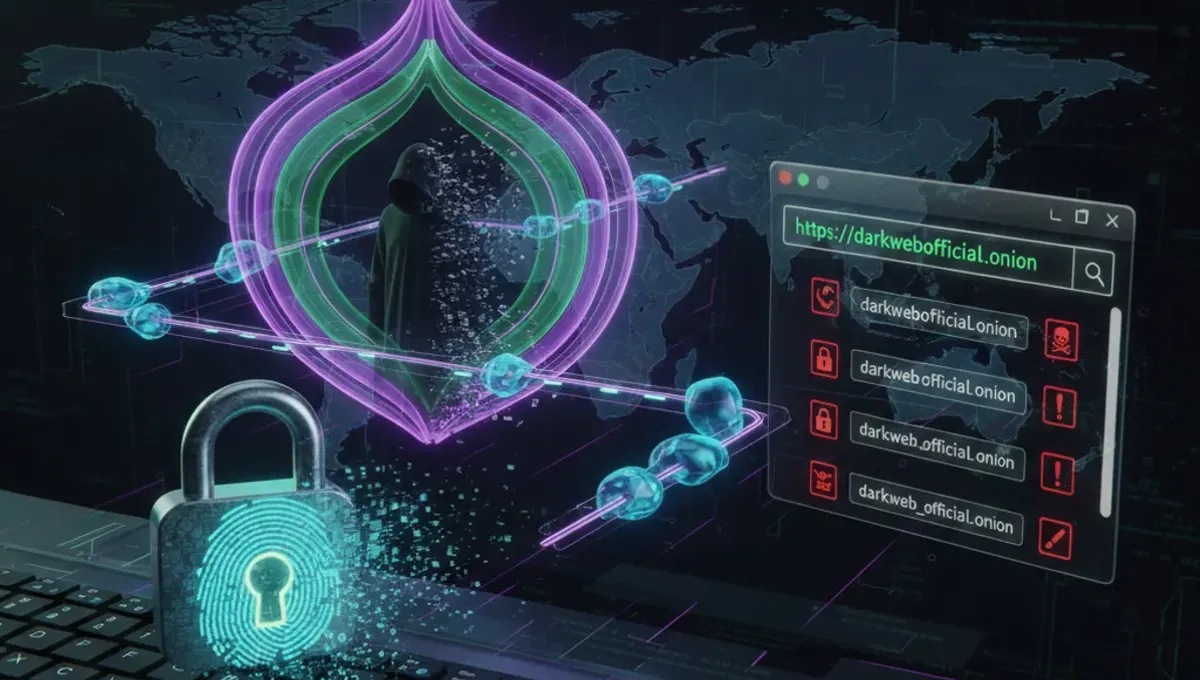
Darkweb sites are web services hosted on the Tor network and accessed through .onion addresses. Unlike regular websites, they do not rely on traditional domain name servers or IP addresses visible to your internet service provider. Instead, they use Tor's onion routing protocol to hide both the server location and the visitor's identity.
When you connect to a darkweb site, your traffic is encrypted and routed through multiple Tor relays before reaching the destination. The site itself is also hidden: its server runs on a machine that does not expose its real IP address. This mutual anonymity is why darkweb sites are used for legitimate purposes like hosting uncensored news archives, privacy-focused forums, and whistleblowing platforms, as well as for illegal marketplaces.
The .onion address itself is a cryptographic hash derived from the site's public key. This means the address is difficult to forge, but it is also long and hard to remember. A typical .onion address looks like a string of 56 characters followed by .onion.
Legitimate Darkweb Official Sites and Their Purpose
Many darkweb official sites serve genuine privacy and security functions. News organizations like major international outlets maintain .onion mirrors to allow journalists and readers in censored regions to access reporting without surveillance. Privacy advocacy groups host forums and documentation on the darkweb to discuss digital rights without corporate tracking.
Whistleblowing platforms operate on the darkweb to protect sources and journalists. These sites use onion services because they need to guarantee that neither the platform operator nor the visitor can be easily identified or tracked by governments or corporations. Academic researchers also use darkweb infrastructure to study anonymity, security, and privacy.
The Tor Project itself maintains official .onion addresses for its website and documentation. These legitimate darkweb official site resources are typically linked from the main Tor Project website and signed with PGP keys. Verifying these signatures is the only reliable way to confirm you are accessing the real site and not a phishing clone.
Deepweb Site List vs. Darkweb Site List
The terms deepweb and darkweb are often confused. The deepweb is any part of the internet not indexed by search engines: your email inbox, your bank account, academic databases, and private company networks all exist on the deepweb. The darkweb is a small, intentionally hidden subset of the deepweb that requires specific software like Tor to access.
A deepweb site list would include resources like library databases and paywalled journals. A darkweb site list refers specifically to .onion addresses and services running on anonymity networks. Understanding this distinction matters because it clarifies what you are actually looking for. If you want to research privacy tools or access censored information, you are looking for darkweb services. If you want to find academic papers or company records, you are looking at the regular deepweb.
Most of the internet is actually deepweb by definition. Only a tiny fraction of that is darkweb. This is why darkweb site lists are much shorter and more specialized than general internet directories.
How Onion Sites Are Discovered and Verified
Finding a legitimate onion site requires verification, not just a list. The safest method is to start from an official source: visit the main website of the organization you trust, then look for a link to their .onion address. Major news outlets, privacy organizations, and the Tor Project all publish their official .onion mirrors on their main websites.
Once you have an .onion address, verify it using PGP signatures when available. Many legitimate darkweb sites publish their public keys and sign announcements about their addresses. You can download the organization's public key from their main website, then verify that the .onion address announcement is signed with that key. This proves the address came from the organization and has not been altered.
Never rely on a darkweb site list or directory that claims to catalog all active onion services. These lists are often outdated, contain phishing clones, or are maintained by people with no way to verify the sites they list. The only reliable onion sites are those you verify directly from official sources.
Phishing Clones and How to Avoid Them
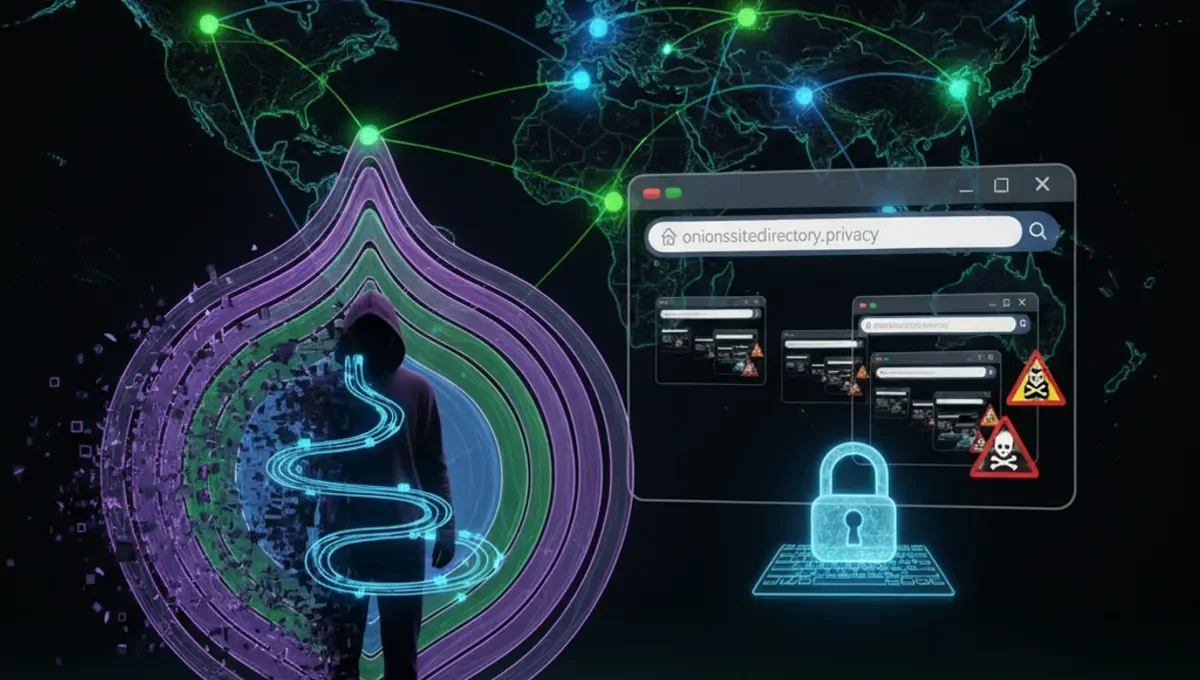
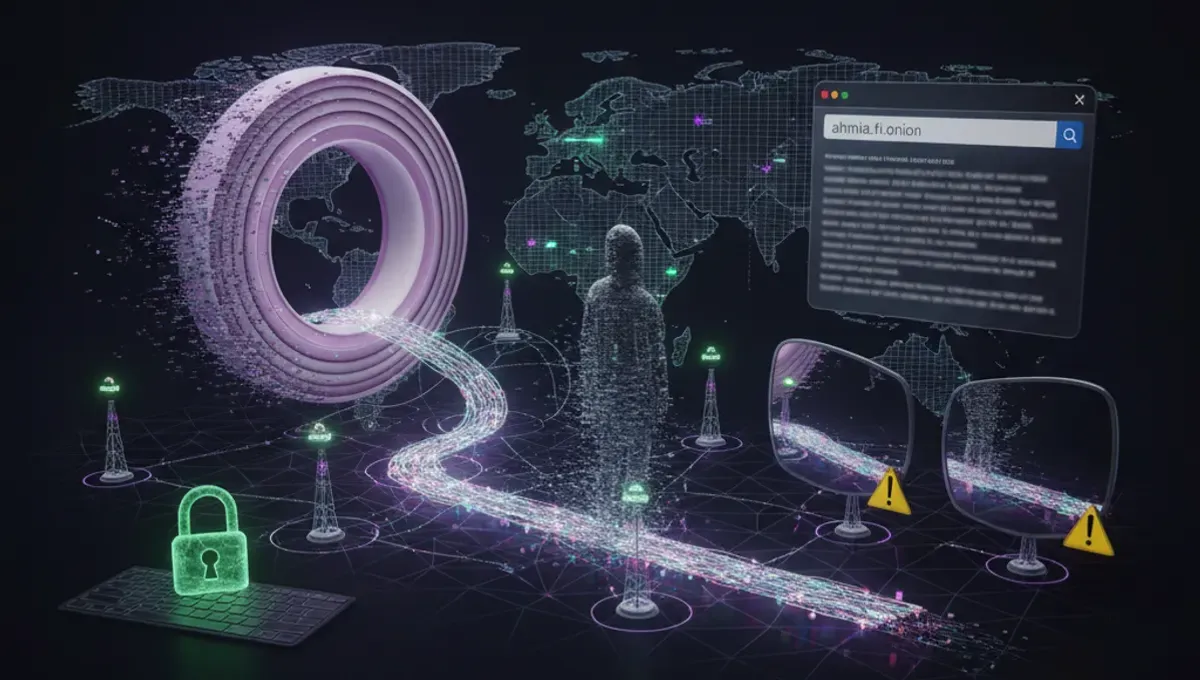
Phishing clones are fake .onion addresses designed to look like legitimate darkweb sites. Because .onion addresses are long random strings, users cannot easily remember or recognize them. A scammer can create a new .onion address that is visually similar to the real one, host a copy of the legitimate site's interface, and trick users into entering credentials or downloading malware.
For example, if the real address is a long string of characters, a phishing clone might differ by only a few characters. When you visit the fake site, it looks identical to the real one. You might log in with your username and password, which the scammer captures. Or you might download what appears to be a legitimate tool but is actually malware.
To protect yourself, always verify the full .onion address before entering any credentials. Bookmark the address from an official source rather than clicking links from forums or lists. Use the Tor Browser's built-in security features, keep it updated, and be skeptical of any site that asks you to download files or enter sensitive information. If you are unsure about a site, do not use it.
Darkweb Marketplace Sites and Their History
Darkweb marketplace sites have operated as online platforms where vendors and buyers could exchange goods and services with some degree of anonymity. These markets used escrow systems, reputation scores, and encrypted messaging to facilitate transactions. Some marketplaces were shut down by law enforcement; others closed due to exit scams, where operators disappeared with customer funds.
The history of these marketplaces shows a pattern: they attract both legitimate privacy-conscious users and criminals. Law enforcement agencies have successfully identified and arrested marketplace operators and major vendors by analyzing blockchain transactions, server logs, and user behavior. This demonstrates that darkweb anonymity is not absolute and that using these platforms carries legal and financial risk.
Understanding how darkweb marketplace sites operated is important for security awareness. It shows how criminals exploit anonymity infrastructure, how law enforcement responds, and why using these platforms for illegal activity is increasingly risky. This knowledge helps you recognize scams and understand the real consequences of darkweb transactions.
Reality Check: Anonymity, Law Enforcement, and Practical Risks
According to Tor Project documentation, the Tor network provides strong anonymity against network-level surveillance, but it does not protect against user error, malware, or poor operational security. This matters because many people assume darkweb sites offer complete anonymity, when in reality your behavior, the metadata you leave behind, and the software you use all create traces.
Public law-enforcement press releases and court records show that darkweb marketplace operators have been identified and prosecuted through blockchain analysis, server seizures, and user behavior patterns. This demonstrates that the darkweb is not a lawless zone where crimes go unpunished. Vendors and users have been arrested, convicted, and sentenced to prison terms.
Security-vendor incident reports document how malware and phishing are rampant on the darkweb. Many sites claiming to offer tools, services, or information are actually designed to steal credentials, install malware, or harvest personal data. The combination of anonymity and lack of accountability creates an environment where scams flourish.
For ordinary users, the practical risk is that accessing darkweb sites exposes you to malware, phishing, and law-enforcement attention if you engage in illegal activity. Legitimate uses like reading censored news or accessing privacy tools carry lower risk, but they still require careful verification and security practices.
Safe Practices for Accessing Darkweb Sites
If you decide to access darkweb sites for legitimate purposes, follow these practices to reduce risk:
- Use the official Tor Browser from the Tor Project website only, never from mirrors or third-party sources.
- Keep your operating system and all software fully updated with security patches.
- Verify .onion addresses from official sources before visiting any site.
- Never maximize your browser window, as this can reveal your screen resolution to websites.
- Disable JavaScript in Tor Browser settings if you do not need it.
- Use a dedicated virtual machine or operating system like Tails or Whonix for darkweb browsing.
- Never download files unless you are certain of their source and have verified them.
- Do not enable plugins or extensions in Tor Browser.
- Assume that any site asking for personal information or credentials is potentially a phishing clone.
- If a site seems suspicious or too good to be true, do not use it.
These steps do not guarantee complete safety, but they significantly reduce the most common attack vectors. The goal is to minimize the information you leak and the malware you might encounter.
Frequently asked questions
Is there a safe darkweb site list I can trust?
No single list is universally safe or complete. The safest approach is to verify .onion addresses directly from official sources: visit the main website of the organization you trust, find their .onion link there, and check for PGP signatures. Never rely on third-party directories or forum posts for addresses.
How do I know if a darkweb site is real or a phishing clone?
Verify the full .onion address against the official source, check for PGP signatures if available, and look for HTTPS and a valid Tor Browser security indicator. If you are unsure, do not log in or download anything. Bookmark addresses from official sources rather than clicking links from other sites.
What is the difference between deepweb and darkweb sites?
The deepweb includes any part of the internet not indexed by search engines, like email and bank accounts. The darkweb is a small subset of the deepweb that requires Tor or similar anonymity software to access. Darkweb sites use .onion addresses; deepweb sites are usually accessed through regular browsers with login credentials.
Can I be traced if I access darkweb sites?
Tor provides strong anonymity against network surveillance, but it does not protect against malware, phishing, user error, or law-enforcement investigation of illegal activity. Your behavior, the files you download, and the information you enter can all create traces. Use security best practices and assume that illegal activity on the darkweb carries real legal risk.
Are all darkweb sites illegal?
No. Many darkweb sites serve legitimate purposes: news organizations maintain .onion mirrors for censored regions, privacy organizations host forums, and whistleblowing platforms protect sources. However, the darkweb also hosts illegal marketplaces and content. The anonymity infrastructure is neutral; how it is used depends on the site and its users.