What the Dark Web Online Actually Is
The dark web online consists of websites and services that require specific software to access. The most common entry point is the Tor browser, which routes your traffic through multiple encrypted relays operated by volunteers around the world. When you visit a .onion address through Tor, your IP address is hidden from the website, and the website's true location is hidden from you. This mutual anonymity is the defining feature.
Onion services are not inherently illegal. They are used by news organizations to receive tips from sources, by people in countries with heavy internet censorship to access uncensored information, and by ordinary users who simply value privacy. The technology was originally developed by the U.S. Naval Research Laboratory and is now maintained by the Tor Project, a nonprofit organization. Understanding this distinction between the technology and its uses is essential to having an informed conversation about the dark web online.
How Tor and Onion Addresses Work
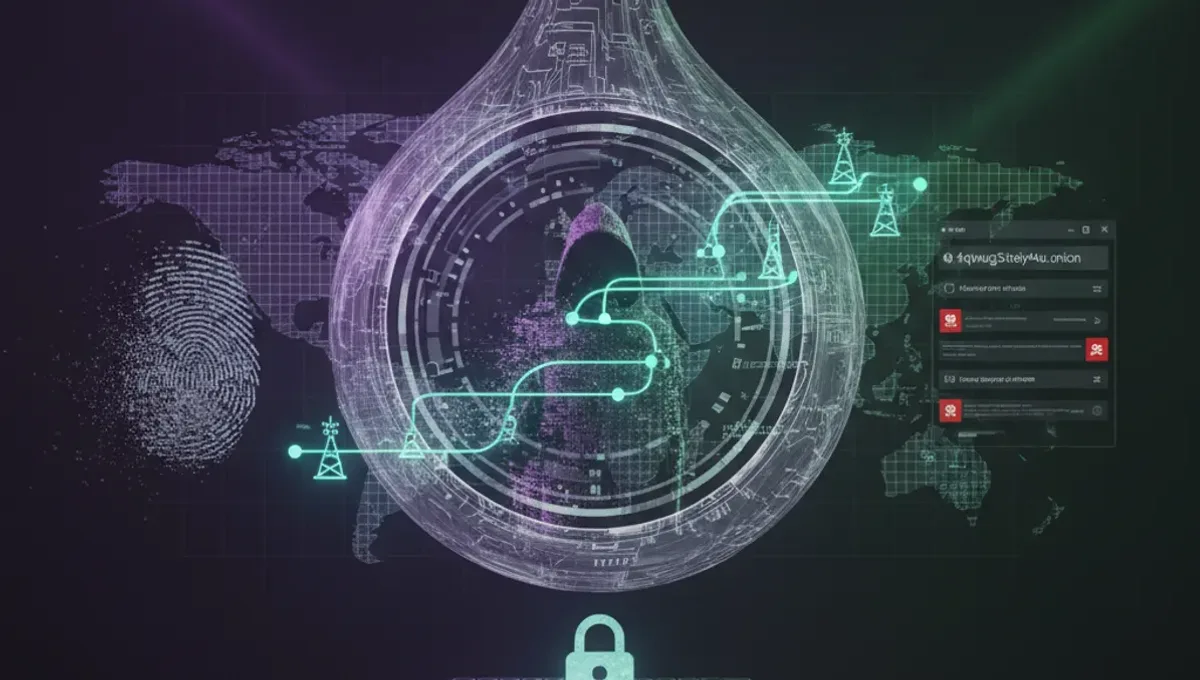
When you use the Tor browser, your connection is encrypted and routed through at least three different relays before reaching its destination. Each relay knows only the previous relay and the next one, so no single point in the chain can see both your IP address and the website you are visiting. Onion addresses are long, seemingly random strings of characters (for example, a 56-character v3 address) that are derived from the server's public key.
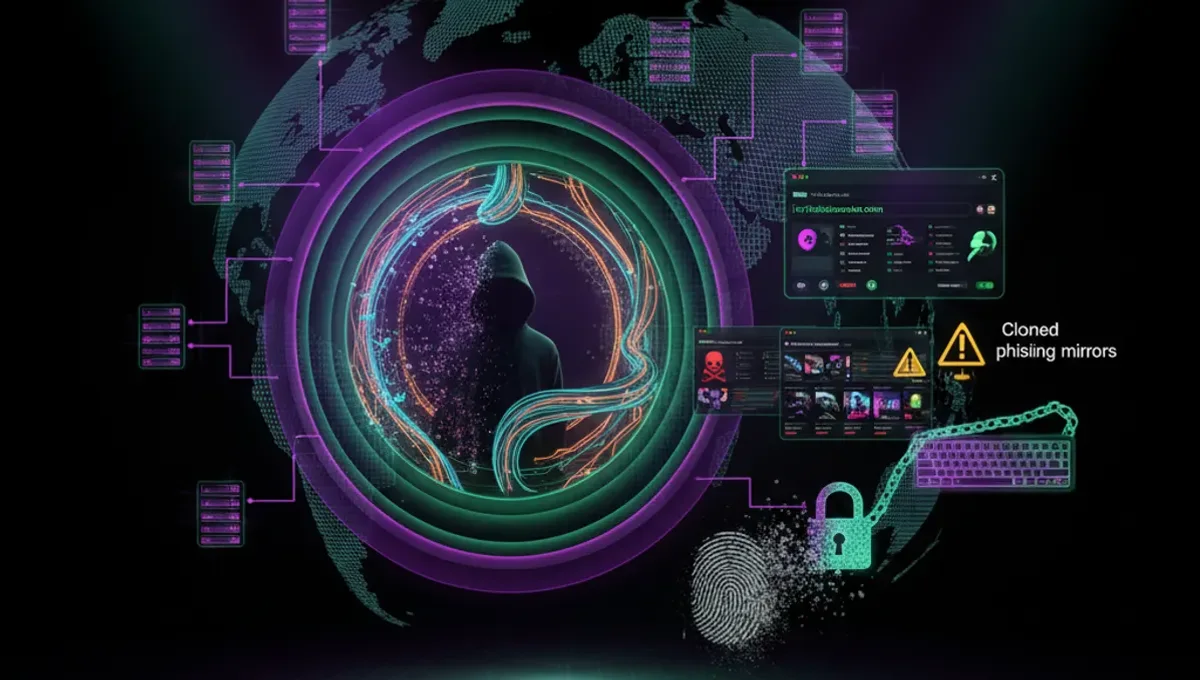
This design means that an onion address is cryptographically tied to the server it represents. You cannot forge an onion address or impersonate a service without possessing its private key. However, this also means that if you mistype an address or follow a link from an untrusted source, you may end up at a phishing clone or a completely different service. The best dark web browser practice is to verify onion addresses through multiple independent sources, preferably PGP-signed announcements from the organization itself. Bookmarking correct addresses and checking them carefully before visiting is a basic safety step.
Common Uses and Why People Go Online to the Dark Web
Journalists use the dark web online to communicate securely with sources and to access news in countries where the internet is heavily filtered. Human rights organizations operate onion services to allow people in repressive regimes to report abuses anonymously. Researchers study onion services to understand how anonymity networks function and where security weaknesses exist. Ordinary people use the Tor browser to protect their browsing habits from their internet service provider, their employer, or their government.
The best dark web apps for these legitimate purposes are straightforward: the Tor browser itself for accessing onion sites, and tools like Tails (a privacy-focused operating system) or Whonix (a virtual machine setup) for users who need a higher level of isolation. These tools are designed to be used safely by people with no special technical background. The key is understanding that accessing the dark web online is not inherently suspicious or illegal. It is a choice to use technology that respects your privacy.
Reality Layer: How the Dark Web Online Actually Behaves
The Tor Project documentation makes clear that Tor is not a magic anonymity cloak. Your anonymity depends on the total number of Tor users at any given moment; if you are the only person using Tor in your region at a specific time, your traffic patterns alone might reveal your identity to a determined observer. Law-enforcement agencies have successfully de-anonymized Tor users by exploiting browser vulnerabilities, analyzing traffic patterns, or identifying operational security mistakes (such as reusing usernames across clearnet and onion services). Court records from prosecutions of darknet marketplace operators show that most arrests resulted not from breaking Tor itself, but from mistakes made by the operators or users: using personal information, failing to launder cryptocurrency properly, or running servers on hosting infrastructure that could be traced.
Security-vendor incident reports consistently document that phishing clones of popular onion services are extremely common. Attackers register similar-looking addresses or compromise mirrors to steal login credentials or cryptocurrency. The lesson for readers is that the dark web online is not a lawless zone where normal security practices do not apply. It is actually a place where operational security mistakes are more costly, because the anonymity you gain from Tor can be completely undone by a single careless action.
Risks and Misconceptions About the Dark Web Online
The most common misconception is that the dark web online is primarily a marketplace for illegal goods. While illegal marketplaces do exist on onion services, they represent a small fraction of the content. The second misconception is that using Tor makes you completely anonymous and untraceable. It does not. Tor protects you from casual surveillance and from your internet service provider seeing which websites you visit, but it does not protect you from malware on your computer, from mistakes you make while using it, or from determined law-enforcement investigation.
A third misconception is that the best dark web browser is something exotic or hard to find. The Tor browser is the standard tool, and it is maintained by the Tor Project. Anything claiming to be a "secret" or "premium" dark web browser is likely a scam or malware. The real risks of using the dark web online are: encountering illegal content by accident, falling victim to phishing or scams, downloading malware, or making operational security mistakes that reveal your identity. These risks are manageable through careful behavior, not through special software.
Best Practices for Safe Dark Web Browsing
If you decide to use the dark web online, follow these steps:
- Download the Tor browser only from the official Tor Project website (torproject.org).
- Keep your operating system and all software fully updated before using Tor.
- Use a dedicated device or virtual machine if possible, or at minimum use a separate user account.
- Verify onion addresses through multiple independent sources before visiting.
- Never maximize your browser window, as this can reveal your screen resolution and help identify you.
- Assume that any onion site could be a phishing clone or a honeypot.
- Never enable plugins or extensions in the Tor browser.
- Do not download files unless you are certain they are safe, and open them in an isolated environment.
- Never use the same username or email address on onion services that you use elsewhere.
- Assume that law enforcement monitors illegal onion services.
These practices are not paranoid; they are standard operational security for anyone using anonymity tools.
Verifying Onion Addresses and Avoiding Phishing Clones
Phishing is the most common attack against users of the dark web online. An attacker creates a website that looks identical to a legitimate onion service but is actually controlled by the attacker. When you enter your credentials, the attacker captures them. The best dark web pages always publish their onion address through multiple channels: on their clearnet website (if they have one), in PGP-signed announcements, on trusted community forums, and sometimes through social media accounts that can be verified through PGP signatures.
To verify an onion address, cross-reference it across at least three independent sources. Check whether the address is listed on the official website of the organization. Look for PGP-signed announcements from the organization's official key. If the organization publishes a fingerprint of their onion address's public key, you can verify it yourself using command-line tools. Never rely on a single source, and never click a link to an onion address from an untrusted website. Bookmarking correct addresses in your browser is safer than searching for them each time.
Moving Forward: Using the Dark Web Online Responsibly
Accessing the dark web online is a choice to use technology that prioritizes your privacy. That choice comes with responsibility. The same anonymity that protects a journalist from a repressive government also protects criminals from law enforcement. The same encryption that keeps your communications private also makes it harder for platforms to moderate content. Understanding these tradeoffs is part of using the technology maturely.
If you use the dark web online, do so with clear intentions. Verify everything. Assume that any service could be compromised or could be operated by law enforcement. Keep your software updated. Use strong, unique passwords. Never assume that anonymity is a license to behave recklessly. The most common way people get caught is not through a flaw in Tor, but through their own mistakes. Start by downloading the Tor browser from torproject.org and reading the official documentation. Spend time understanding how the technology works before you rely on it for anything sensitive.
Frequently asked questions
Is it illegal to access the dark web online
No. Accessing the dark web online using the Tor browser is legal in most countries. The technology itself is neutral. What is illegal is using it to buy or sell illegal goods, or to commit crimes. Many people use Tor for legitimate reasons: journalists, activists, privacy-conscious individuals, and researchers. Law enforcement distinguishes between using Tor and using it for illegal purposes.
What is the best dark web browser to use
The Tor browser is the standard and most reliable option. It is maintained by the Tor Project and is free. Download it only from torproject.org. Any other tool claiming to be a "dark web browser" is likely a scam or malware. The Tor browser includes all the protections you need; you do not need anything else.
Can I be traced if I use the dark web online
Tor protects you from casual surveillance and from your internet service provider seeing which sites you visit. However, you can be traced if you make operational security mistakes, such as reusing usernames, downloading malware, or revealing personal information. Law enforcement has successfully de-anonymized Tor users through investigation and by exploiting browser vulnerabilities. Tor is not a guarantee of anonymity; it is a tool that requires careful use.
How do I know if an onion address is real
Verify the address through multiple independent sources. Check the organization's official website, look for PGP-signed announcements, and cross-reference it on trusted community forums. Never rely on a single source. If you are unsure, do not visit the site. Phishing clones of popular onion services are common, so verification is essential before you enter any credentials.
What are the best dark web pages for news and information
Major news organizations operate onion mirrors of their websites for readers in countries with internet censorship. Libraries and archives also maintain onion services. The Tor Project website itself provides a list of recommended onion services. Always verify addresses through official channels before visiting. Be cautious of any onion site that asks for personal information or payment.