What Wikipedia Says About the Dark Web
Wikipedia's dark web article covers the basic definition: a network overlay requiring specific software to access, most commonly the Tor browser. The article typically explains that the dark web enables anonymous communication and is used by journalists, activists, and ordinary people seeking privacy. It also mentions that illegal marketplaces and forums have operated on the dark web, and that law enforcement has successfully investigated and shut down several high-profile operations.
Wikipedia's strength is in historical accuracy and neutral framing. The article documents how Tor was originally developed with U.S. Naval Research Laboratory funding and later maintained by the Tor Project as a nonprofit. This context matters because it shows that anonymity technology itself is not inherently criminal. However, Wikipedia entries are general references, not technical guides. They do not explain how to verify onion addresses, avoid phishing clones, or assess the security of a specific dark web browser. For those details, you need sources beyond Wikipedia.
How Tor and Onion Services Actually Work
The Tor network routes your traffic through a series of volunteer-operated relays, with each relay knowing only the previous and next hop. This is the core principle behind onion routing, which Wikipedia explains but does not demonstrate. An onion service (formerly called a hidden service) is a server that is itself hidden within the Tor network, meaning its location is not revealed to users or even to the relays handling the traffic.
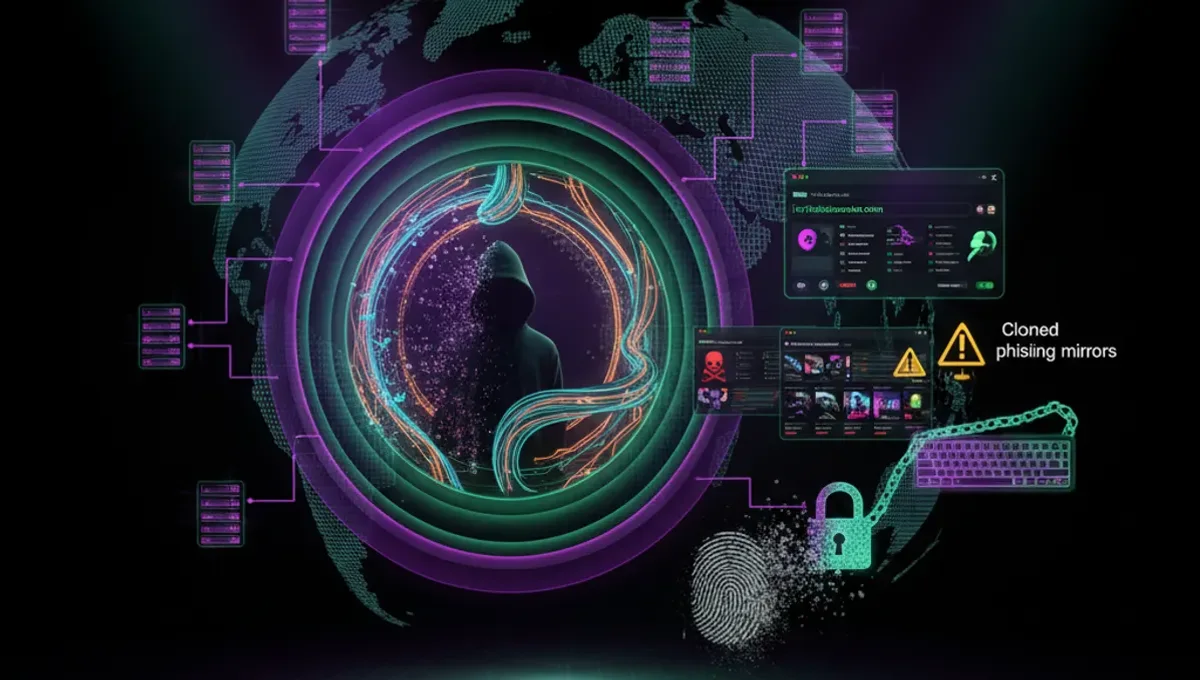
When you access a .onion address, you are not connecting to a server on the regular internet; you are connecting to a Tor-based service that has no conventional IP address. This design makes it extremely difficult for an observer to determine who is communicating with whom. However, this same property makes it easy for scammers to create fake copies of legitimate onion services. A phishing clone of a popular forum or marketplace can look identical to the real one, and without additional verification (such as PGP-signed announcements or official mirrors), users can be tricked into handing over credentials or funds.
Best Dark Web Browser and Access Methods
The Tor browser is the most widely recommended tool for accessing the dark web safely. It is maintained by the Tor Project and bundles Tor with Firefox, configured to prevent fingerprinting and leaks. Wikipedia mentions the Tor browser but does not provide installation or usage instructions; those belong in technical documentation from the Tor Project itself.
Other approaches exist, such as using Tails (a live operating system that routes all traffic through Tor) or Whonix (a virtual machine setup that isolates Tor traffic). Each has different trade-offs in terms of ease of use, security model, and persistence. The best dark web browser for you depends on your threat model and technical comfort level. If you are a journalist or activist in a hostile environment, Tails or Whonix may be more appropriate than the Tor browser alone. If you are simply exploring onion services for research or curiosity, the Tor browser is the standard entry point.
Reality Check: How the Darknet Ecosystem Actually Behaves
Three key insights from Tor Project documentation, law-enforcement press releases, and security research clarify what Wikipedia often leaves implicit.
First, the Tor network itself is not a marketplace or a place. It is infrastructure. Illegal activity happens on the dark web not because Tor enables it, but because anonymity reduces the cost of enforcement. According to Tor Project documentation, the majority of Tor traffic is legitimate: journalists, activists, people in censored countries, and ordinary users protecting their privacy. This matters because it means the dark web is not synonymous with crime, even though crime is more visible there.
Second, law enforcement has successfully de-anonymized Tor users and seized darknet marketplaces. Court records and FBI press releases document operations against major forums and markets, often through a combination of technical investigation, operational security failures by administrators, and cooperation with international partners. This matters because it shows that Tor is not a guarantee of anonymity; it is a tool that requires correct usage and operational security to be effective.
Third, phishing and exit scams are endemic on the dark web. Security-vendor incident reports and forum discussions show that users regularly lose money to fake mirrors and fraudulent vendors. This matters because it means that even if you access the dark web safely, you are not safe from social engineering and fraud.
Best Dark Web Search and Information Discovery
Finding reliable information on the dark web is harder than on the surface web because there is no Google equivalent and no reputation system that works across all onion services. Wikipedia does not cover dark web search engines in detail, but several exist: some index onion services by crawling them, others rely on user submissions.
The challenge is that search results can point to phishing clones, honeypots (law-enforcement traps), or simply defunct services. A search result that looked legitimate yesterday may be a scam today. This is why many experienced users rely on word-of-mouth, PGP-signed announcements from trusted sources, and official mirrors listed on the surface web. If you are looking for information about a specific onion service or forum, start by checking whether the project or community has an official website or social media presence on the surface web. Cross-reference any .onion address against PGP-signed announcements or the official resources page of this site.
Best Dark Web Pages and Sites: Verification and Safety
Wikipedia lists some notable onion services that have been documented in the press or academic research, such as news outlets and privacy organizations that operate mirrors on Tor. These are legitimate uses of the dark web. However, Wikipedia does not provide a directory of active onion services, nor should it, because such a list would become outdated and could inadvertently direct users to clones or honeypots.
When evaluating any dark web site or page, ask yourself: Is there an official announcement on the surface web or in a PGP-signed message? Does the site have a history of operation and a reputation in the community? Are there multiple independent sources confirming the address? If you cannot answer yes to these questions, treat the site as unverified. The best dark web pages are those that are transparent about their purpose, maintain consistent communication with their users, and provide ways to verify their legitimacy. This might include PGP keys, official mirrors, or links from trusted organizations.
What Wikipedia Misses: Technical Risks and Operational Security
Wikipedia provides a good overview of what the dark web is and why it exists, but it does not address the practical risks of using it incorrectly. Many users assume that simply running the Tor browser makes them anonymous, when in fact anonymity depends on dozens of small decisions: not maximizing your browser window (which can aid fingerprinting), not installing plugins, not torrenting over Tor, not using the same username across multiple sites, and not revealing personal information in forum posts.
Wikipedia also does not explain how to verify that you are using a legitimate copy of the Tor browser or how to check for updates. It does not warn about malware that targets Tor users or explain the difference between anonymity and privacy. These gaps are not Wikipedia's fault; they reflect the fact that Wikipedia is an encyclopedia, not a security guide. If you are planning to use the dark web for anything sensitive, you need to read technical documentation from the Tor Project, security guides from organizations like the EFF, and operational security advice from experienced practitioners.
Next Steps: Verify and Learn Safely
Start by reading Wikipedia's articles on Tor, onion services, and the dark web as a foundation. Then move to official sources: the Tor Project's website for technical details, the EFF's security guides for practical advice, and this site's resources page for verified onion addresses and current information.
If you want to explore the dark web, do so on a machine you can afford to compromise, with a clear understanding of what you are looking for and why. Do not assume that anonymity equals safety or that everything on the dark web is either a scam or illegal. The dark web hosts legitimate journalism, privacy tools, and communities that cannot operate freely on the surface web. Approach it with the same critical thinking you would apply to any unfamiliar network: verify sources, check for phishing, and understand the risks before you act.
Frequently asked questions
What does Wikipedia say about the dark web
Wikipedia defines the dark web as a network overlay requiring specific software (usually Tor) to access. It explains that the dark web enables anonymous communication and documents both legitimate uses (journalism, activism, privacy) and illegal activities that have occurred there. Wikipedia also covers the history of Tor and mentions law-enforcement actions against major marketplaces.
Is the Tor browser the best dark web browser
The Tor browser is the most widely recommended and easiest entry point for accessing the dark web. It is maintained by the Tor Project and includes security-focused configurations. For higher-threat scenarios, Tails or Whonix offer additional isolation, but they require more technical setup. The best choice depends on your threat model and use case.
How do I verify a dark web site is real and not a phishing clone
Check for PGP-signed announcements on the surface web or official mirrors listed by the project. Cross-reference the .onion address against multiple independent sources. Legitimate dark web sites typically maintain official communication channels outside Tor. If you cannot verify the address through official channels, treat it as unverified and do not use it.
Can I be traced if I use Tor and the dark web
Tor is designed to obscure your location and identity, but it is not a guarantee of anonymity. Law enforcement has successfully de-anonymized Tor users through technical investigation, operational security mistakes, and cooperation with service providers. Anonymity depends on correct usage, good operational security, and avoiding actions that reveal your identity (like using the same username across sites or revealing personal information).
What are the biggest risks of using the dark web
The main risks include phishing clones of legitimate sites, scams and exit frauds by vendors, malware targeting Tor users, and law-enforcement investigation. Additionally, many users overestimate the anonymity Tor provides and make mistakes that reveal their identity. The dark web also hosts illegal marketplaces, and accessing or using them carries legal consequences.