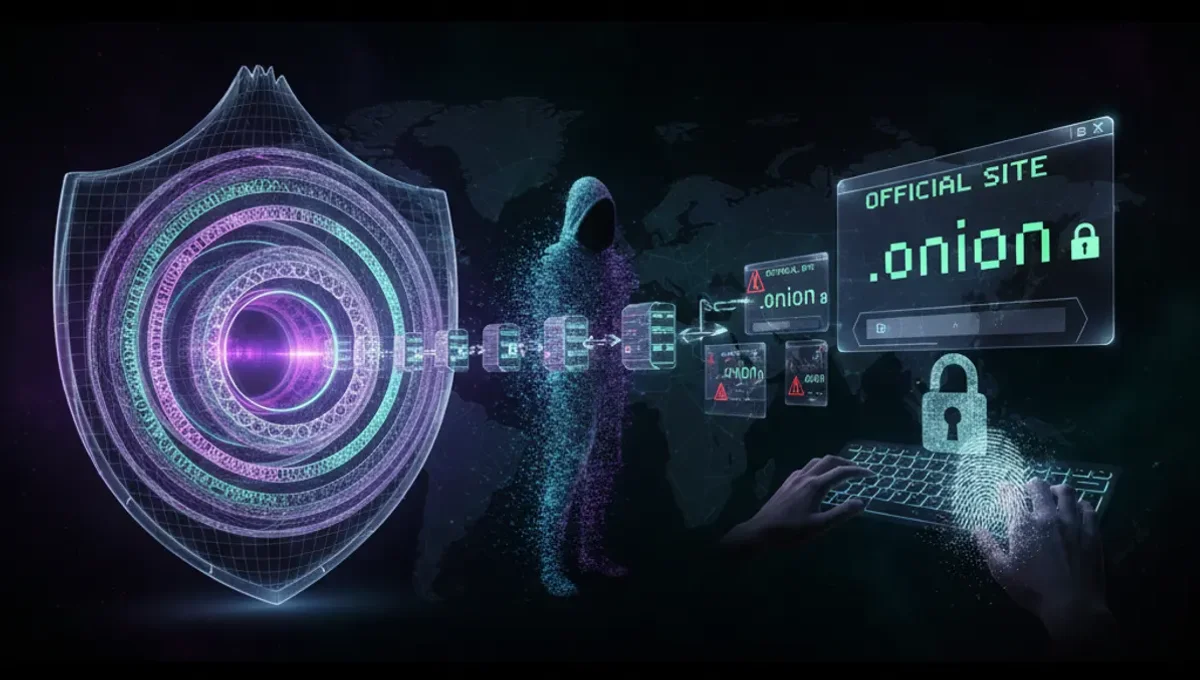
What a www dark web site Address Actually Is
A www dark web site is typically an onion address, a special URL that ends in .onion instead of .com or .org. These addresses are generated by the Tor network and route traffic through multiple encrypted relays, making both the user and the site operator anonymous. The address itself is a long string of characters, often 56 characters in the newer v3 format, and looks nothing like a regular website URL.
Onion addresses are not registered through traditional domain registrars. Instead, they are created locally on a server running Tor hidden services software. This means no central authority issues them, and no DNS lookup reveals their real IP address. The Tor Project documentation explains that this architecture prevents network-level surveillance of who is connecting to what service.
When someone refers to a www dark web site com or www dark web com free, they are usually asking about accessing a specific marketplace, forum or service. However, the .com extension does not actually exist on the dark web in the traditional sense. The confusion often arises because people describe these services in casual language before they know the technical details.
Why Phishing Clones and Fake Sites Proliferate
The anonymity of onion addresses creates a unique problem: anyone can create a site that looks identical to a legitimate one, and users have no built-in way to verify which is real. A dark web adult site, a dark web gore site, or any other marketplace can be cloned within hours. The original operator loses no ability to operate, and the clone operator gains access to users' credentials, cryptocurrency, or personal data.
Phishing clones typically appear in search results, forum posts, or social media mentions before the legitimate site is even aware of them. Users who do not verify the address through PGP-signed announcements or official channels will often land on the fake version. This is not a flaw unique to the dark web, but the stakes are higher because users are already in a heightened state of distrust and may not have other ways to verify legitimacy.
The dark web official site problem is that there is no official registry. Each service must publish its real address through secure channels: PGP-signed statements, verified social media accounts, or trusted community moderators. If you cannot find a PGP signature or a clear chain of trust, you should assume the site you found is a clone.
How to Verify a Real Onion Address
Verification requires three steps:
- Find the PGP-signed announcement from the service operator on a trusted platform (their official Twitter account, a subreddit they control, or a pinned post on their forum).
- Download the operator's public PGP key from multiple independent sources and verify the fingerprint matches.
- Verify the signature on the announcement using the public key to confirm the address is authentic.
If a site does not publish PGP-signed announcements, treat it with extreme caution. Legitimate services understand that users need a way to verify they are not being phished, and they publish this information consistently.
Another verification method is to check the site's onion address history on community resources dedicated to dark web monitoring and data leaks. These resources often track which addresses have been active, which have been seized by law enforcement, and which are known clones. However, this method only works if the service has been around long enough to have a documented history.
Reality Layer: How the Ecosystem Actually Behaves
According to Tor Project documentation on hidden services, the technical design of onion addresses does not prevent phishing or social engineering. The anonymity that protects legitimate users also protects attackers, and the burden of verification falls entirely on the user. This matters because it means no amount of technical sophistication can replace human judgment and due diligence.
Public law enforcement press releases from seizures of major dark web marketplaces show a consistent pattern: users often do not realize they are on a clone until they have already sent funds or personal information. The FBI and other agencies have documented cases where phishing clones operated for months before the real site even noticed. This tells you that the dark web community itself struggles with verification, and casual users are at even higher risk.
Court records from prosecutions of dark web operators reveal that many sites that appeared to be legitimate marketplaces were actually run by law enforcement as honeypots or were exit scams from the start. This context matters because it means verification of authenticity does not guarantee the site is safe or legal to use. A real address is a necessary condition for safety, not a sufficient one.
The Difference Between Onion Sites and Surface Web Mirrors
Some legitimate services operate both on the surface web and on the dark web. A www dark web site com free version might refer to a service that has both a regular website and an onion mirror. The onion version typically offers the same functionality but with the added privacy benefit of Tor routing.
However, the onion version is not always a perfect copy. Some services disable certain features on their dark web mirror for security reasons, or they require different authentication methods. For example, a service might not allow password recovery on the onion version because email-based recovery would leak metadata.
When evaluating whether a dark web version of a service is legitimate, check if it is mentioned in the official announcements of the surface web version. If the main website does not acknowledge the onion mirror, it is likely a clone. This is especially important for services that claim to offer privacy or security features, because the entire point is to use the official version, not a copy.
Common Mistakes When Searching for Dark Web Sites
The first mistake is typing a query like www dark web site into a regular search engine and expecting to find onion addresses. Google, Bing and other surface web search engines do not index .onion addresses. Any result that claims to be a direct link to a dark web site from a regular search engine is either a scam or a phishing page.
The second mistake is trusting Reddit threads or forum posts that list onion addresses without verification. While communities like Reddit do discuss dark web topics, the addresses posted there are often outdated, cloned, or intentionally malicious. Always cross-reference with PGP-signed announcements from the service operator.
The third mistake is assuming that a site is safe because it has been around for a long time. Longevity does not guarantee legitimacy. Some of the most sophisticated phishing operations have run for years by slowly building trust before executing a large-scale theft. The only reliable verification method is PGP signature checking.
What to Do If You Cannot Verify an Address
If you cannot find a PGP-signed announcement or a clear chain of trust for a site you want to visit, do not visit it. This is the safest rule. The cost of being wrong is potentially losing cryptocurrency, having your credentials stolen, or exposing your Tor usage patterns to a honeypot.
Instead, use the Useful Resources page on this site to find verified links and official announcements. Many legitimate dark web services publish their addresses through multiple channels, and if a service is worth using, it is worth waiting to find the verified address.
If you have already visited a site and are unsure whether it was real, assume it was not. Change any passwords you used on that site, monitor your email and cryptocurrency addresses for suspicious activity, and consider running a full security audit of your system. Do not assume that visiting a phishing site automatically means you have been compromised, but treat it as a warning sign to review your security practices.
Frequently asked questions
How do I know if a dark web site is real or a phishing clone
Check for a PGP-signed announcement from the service operator on their official social media or community channels. Verify the operator's public key from multiple sources and confirm the signature matches. If the site does not publish PGP-signed addresses, treat it as unverified and do not use it.
What does www dark web site com mean
This phrase usually refers to a dark web marketplace or forum that someone is trying to describe in casual language. The .com extension does not actually exist on the dark web. Real onion addresses end in .onion and are long strings of characters, not traditional domain names.
Can I find dark web site addresses on Google or regular search engines
No. Google does not index .onion addresses. Any result claiming to be a direct link to a dark web site from a regular search engine is either a scam or a phishing page. Use verified resources and PGP-signed announcements instead.
What should I do if I accidentally visited a phishing clone
Change any passwords you used on that site immediately. Monitor your email and cryptocurrency addresses for suspicious activity. Do not assume you have been compromised, but treat it as a warning to review your security practices and use stronger verification methods in the future.
Why do dark web sites get cloned so easily
Onion addresses are anonymous and decentralized, so anyone can create an identical-looking copy. There is no central authority to verify which version is real. Users must verify authenticity themselves through PGP signatures or trusted community resources.