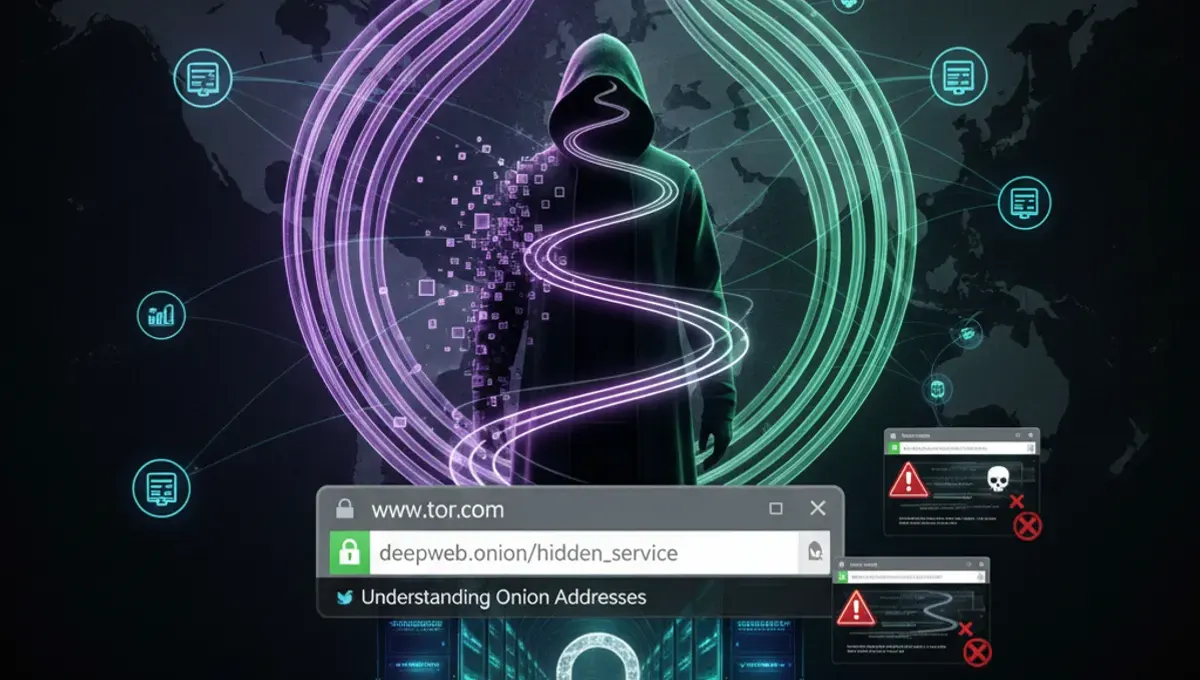
What www darkwebsite com Actually Refers To
URLs like www darkwebsite com do not resolve to functional dark web services. The dark web operates primarily through the Tor network using .onion addresses, which are cryptographically generated and look nothing like standard domain names. When you see www dark web com free or www dark web site com in search results, these are typically either misdirected search engine results, phishing landing pages designed to harvest credentials, or archived references to services that no longer exist.
The confusion arises because people often search for dark web resources using plain-language terms rather than actual onion addresses. Search engines index these phrases, but the URLs themselves do not lead to legitimate dark web services. Understanding this distinction is the first step toward safe browsing.
How Onion Addresses Actually Work
A real onion address is a 56-character string of letters and numbers followed by .onion, generated through Tor's hidden service protocol. These addresses are not registered through traditional domain registrars and cannot be accessed through standard browsers. Instead, they require the Tor Browser, which routes your connection through multiple Tor relays to reach the hidden service.
When a service operator creates an onion address, the address itself serves as both the location and a cryptographic proof of authenticity. This means the address is deterministic: the same service always has the same onion address. This is fundamentally different from www tor com dark web or similar phrasings, which have no technical meaning in the Tor ecosystem. Real onion services are announced through PGP-signed statements or official project pages, never through generic URLs.
Why Phishing Clones Exploit These Search Terms
Attackers create fake landing pages and register domains like www darkwebsite com to intercept people searching for dark web access. These pages often mimic the appearance of legitimate Tor Browser download sites or onion service directories. When a user lands on one of these phishing pages, they may be tricked into downloading malware, entering credentials, or revealing personal information.
The attack works because searchers are often in a hurry and do not verify the source before clicking. A phishing site might claim to host a directory of darkweb com website links or offer a "free" guide to accessing dark web site com services. The legitimate Tor Project website, by contrast, uses only official domains and signs all releases with their PGP key. Always verify any download or directory through the official Tor Project site before trusting it.
How to Verify Legitimate Onion Addresses
If you need to access a specific onion service, follow these verification steps:
- Visit the official project or organization website using a standard browser and a secure connection (HTTPS).
- Look for a PGP-signed announcement or a clearly labeled onion address on that official site.
- Copy the onion address directly from the official source; never search for it on a general search engine.
- Open Tor Browser and paste the address into the address bar.
- Verify that the site's SSL certificate or onion address matches what you copied from the official announcement.
- Check for any browser warnings about certificate mismatches or security issues.
This process prevents you from accidentally visiting a phishing clone. Many legitimate services, including news organizations and privacy-focused projects, publish their onion addresses on their main websites specifically to help users find them safely.
Common Mistakes When Searching for Dark Web Resources
People often make predictable errors when trying to access dark web services. Searching for generic phrases like www dark web com free or darkweb com website in a standard search engine returns results that are not connected to actual onion services. Clicking on these results wastes time and exposes you to phishing and malware.
Another mistake is trusting directories or link lists that claim to catalog onion addresses. While some historical resources like the Hidden Wiki existed, most current link aggregators are either outdated, compromised, or designed to harvest visitor data. The safest approach is to find onion addresses through official channels: the organization's main website, their social media accounts, or PGP-signed announcements from trusted sources. If you cannot find an official announcement, the service may not exist or may not be worth accessing.
Reality Check: How the Ecosystem Actually Behaves
The Tor Project's technical documentation confirms that onion addresses are generated cryptographically and cannot be guessed or searched for in traditional ways. This matters because it means no legitimate dark web service operates under a URL like www darkwebsite com or www tor com dark web. These phrases have no technical validity in the Tor protocol.
Law enforcement and security vendors have documented that phishing pages using these generic dark web search terms are a primary vector for credential theft and malware distribution. Court records from darknet marketplace seizures show that users were often directed to fake mirrors and phishing clones through search results and social media, leading to account takeovers and financial losses. The lesson is straightforward: if you cannot verify an address through an official PGP-signed announcement, do not trust it. The decentralized nature of Tor means there is no central registry to check; verification is your responsibility.
What to Do If You Encounter These URLs
If you see a URL like www darkwebsite com or www dark web site com in search results, do not click it. Instead, close the tab and search for the specific service or organization you need by name, then visit their official website directly. From there, look for an onion address announcement.
If you are trying to access a particular dark web service and cannot find an official onion address, that service may not exist, may be offline, or may be a scam. Resist the urge to click on the first search result. Take the time to verify through official channels. This single habit will protect you from phishing, malware, and credential theft far more effectively than any other security measure. The dark web is not a place where speed and convenience are rewarded; careful verification is the only reliable defense.
Frequently asked questions
Is www darkwebsite com a real dark web address?
No. Real dark web addresses are .onion domains that work only through Tor Browser. URLs like www darkwebsite com are either phishing pages, inactive mirrors, or misdirected search results. They do not connect to legitimate onion services.
How do I find a real onion address for a service?
Visit the organization's official website using a standard browser, then look for a PGP-signed announcement or a clearly labeled onion address. Never search for onion addresses on a general search engine. Copy the address directly from the official source and verify it matches when you access it through Tor Browser.
What happens if I click on a phishing dark web link?
You may be redirected to a fake site designed to steal your credentials, harvest personal information, or distribute malware. Phishing pages often mimic legitimate services and are difficult to distinguish at first glance. Always verify the source before clicking any dark web related link.
Why do search engines return results for www dark web com free?
Search engines index pages that contain these phrases, even though the URLs themselves are not functional dark web addresses. These results are often phishing pages or archived content. Search engine results are not a reliable way to find legitimate dark web services.
How can I tell if an onion address is legitimate?
Verify it through an official PGP-signed announcement from the organization, check for SSL certificate warnings in Tor Browser, and confirm the address matches exactly what you copied from the official source. If you cannot verify it through official channels, do not trust it.